Why Blog?
“Our kids need role models and guides to teach them socialisation skills to participate in a connected community” Graham Wegner
In the past I have used email as a learning tool for connecting students in my classes to a wider global neighbourhood. This has very obviously led to an increase in their understanding of other people’s learning and living but even more importantly a huge increase in their understandings about themselves.
Web 2.0 or 3.0 now - the new social networking tools have become the new learning technologies. Web 2.0 tools will continue to replace the more historic and passive formats. Yep, “E-mailing is for old people“ as one student commented. So true! Unless we grab the tools of our students and embrace them as a learning technology, our students will leave us behind and we will miss a superb opportunity to share our own wisdom with them as they glide into this new social information age.
Connecting students through global learning networks using blogs, wikis, podcasts etc can assist to make learning rich, real and relevant to our students. As Robert Minahan pointed out at the CyberSafety sessions, and to the surprise of their parents, and I suspect – their teachers, our kids are doing it anyway. They have their own beebo sites, myspace pages etc but few have had any guidelines into the safety and ethical aspects to be considered. We have left them to navigate through a mine field with no protection.
Web 2.0 changes our traditional paradigms on how information and knowledge are created, shared and used. We are in a now in a new world. We have Trade Me instead of garage sales, fishpond instead of bookshops, google instead of newspapers, podcasts instead of radio, myspace instead of the mall. Yep we can blog and wiki too. Rather than deny these new social networking tools exist, let’s embrace them with our students, and share our collective wisdom to benefit the future.
I blog to share and reflect, to have added input and learn from others, to be connected to my friends, colleagues and a much wider network and to be involved and learn alongside one another.
“Teachers have the skills and responsibility to teach students how to critically navigate the information overflow but only if they have working knowledge of the new information landscape.” Graham Wegner
Monday, February 26, 2007

Sunday, February 25, 2007
Principals As Lead Teachers:
How are we promoting and sustaining the professional learning community within each of our schools?
Does your vision for learning adorn the staffroom wall or is it more visible in the practices of your school community? If we went into the classrooms and got alongside the students would we see it? What does your vision for learning look like in the faces of your staff, your BoT and parent community, on your ancillary staff, out in the playground?
This succinct 2 page article is a useful guide for schools and captures the key elements:
"What is a Professional Learning Community"
A worthwhile read as we each continually reflect on our own vision for learning and the progress we as individuals are making towards it.
How is this happening in our own schools? What does it look like, feel like, sound like? Let's look at the key elements and discuss our findings....
I have always thought the actions of people the best interpreters of their thoughts. - John Locke
How are we promoting and sustaining the professional learning community within each of our schools?
Does your vision for learning adorn the staffroom wall or is it more visible in the practices of your school community? If we went into the classrooms and got alongside the students would we see it? What does your vision for learning look like in the faces of your staff, your BoT and parent community, on your ancillary staff, out in the playground?
This succinct 2 page article is a useful guide for schools and captures the key elements:
"What is a Professional Learning Community"
A worthwhile read as we each continually reflect on our own vision for learning and the progress we as individuals are making towards it.
How is this happening in our own schools? What does it look like, feel like, sound like? Let's look at the key elements and discuss our findings....
I have always thought the actions of people the best interpreters of their thoughts. - John Locke
Saturday, February 24, 2007
Learning At School - Rotorua
I must remember to make my camera next time! Some photos would have been a real bonus.
The conference has been great. My own focus area for this conference was on enriching Inquiry and I wasn't disappointed. I enjoyed presenting the breakout with Gail. It went well and we always gain so much from this experience. During this first breakout session, we shared our cluster's inquiry journey, a lot of the work we have done in the past 10 plus years, sharing some of the many resources we have made and some of the ICT Tools we have found beneficial. It was great to be able to share Carol's class's Sandpit Inquiry also. Paengaroa are really moving well down the Inquiry track as are some of our other schools. Such an enriching experience for those involved. Our presentation focus on Questioning and Thinking, Finding and Using Information to Make a Difference certainly seemed to hit the mark and Carol's junior class inquiry displays this so well.
I missed the first keynote as we were preparing for our presentation but I hear the video by Sir Ken Robinson was great. It can be downloaded from http://www.ted.com/tedtalks/ Will have to catch up with that myself when I get a moment. I know others will want to go over this again too. Thanks to Douglas, and Telecom's bb access, I now have this clip in my trusty USB .
A real highlight for me has been the introduction to Classblogmeister. See the posting below. I'd highly recommend it to all involved in Inquiry or wanting their students to write and read with in an authentic and purposeful environment. Blogging can simply be part of your literacy programme, Thanks to Jody and Tom who shared their knowledge so well. This site can replace the IB5 learning logs used by so many of our cluster students.
Other sessions on Questioning and Virtual Networks will also impact into our cluster inquiry plans. Thanks to Rachel Jeffares for the session on blogging too. I wished I had a whole day to just learn and play with this! The keynotes by David Warlick and Russell Bishop were well worth hearing. I am only just beginning to get my head around the Web 2.0 tools available which really do open a whole new world up. Isn't education exciting! We need to not only embrace these tools but the people changes that have to be made as well. WHS's Mrs Kharana does this so well. Great to see Whakatane High School on the big screen, celebrating such an inspirational teacher. We have always felt privileged to have had Mrs Kharana teach our own children. Would like to view Russell Bishop's slide show all over again.
Our cluster is superb! What a great group to go conferencing with. Thank goodness we have the weekend to recover!
Yep a good few days. I enjoyed the networking with others in so many ways and appreciated the opportunity to be enveloped into such a knowledgeable and friendly group of people, all so ready to share their time, experience, wit and humour. Can't wait til next time!
I must remember to make my camera next time! Some photos would have been a real bonus.
The conference has been great. My own focus area for this conference was on enriching Inquiry and I wasn't disappointed. I enjoyed presenting the breakout with Gail. It went well and we always gain so much from this experience. During this first breakout session, we shared our cluster's inquiry journey, a lot of the work we have done in the past 10 plus years, sharing some of the many resources we have made and some of the ICT Tools we have found beneficial. It was great to be able to share Carol's class's Sandpit Inquiry also. Paengaroa are really moving well down the Inquiry track as are some of our other schools. Such an enriching experience for those involved. Our presentation focus on Questioning and Thinking, Finding and Using Information to Make a Difference certainly seemed to hit the mark and Carol's junior class inquiry displays this so well.
I missed the first keynote as we were preparing for our presentation but I hear the video by Sir Ken Robinson was great. It can be downloaded from http://www.ted.com/tedtalks/ Will have to catch up with that myself when I get a moment. I know others will want to go over this again too. Thanks to Douglas, and Telecom's bb access, I now have this clip in my trusty USB .
A real highlight for me has been the introduction to Classblogmeister. See the posting below. I'd highly recommend it to all involved in Inquiry or wanting their students to write and read with in an authentic and purposeful environment. Blogging can simply be part of your literacy programme, Thanks to Jody and Tom who shared their knowledge so well. This site can replace the IB5 learning logs used by so many of our cluster students.
Other sessions on Questioning and Virtual Networks will also impact into our cluster inquiry plans. Thanks to Rachel Jeffares for the session on blogging too. I wished I had a whole day to just learn and play with this! The keynotes by David Warlick and Russell Bishop were well worth hearing. I am only just beginning to get my head around the Web 2.0 tools available which really do open a whole new world up. Isn't education exciting! We need to not only embrace these tools but the people changes that have to be made as well. WHS's Mrs Kharana does this so well. Great to see Whakatane High School on the big screen, celebrating such an inspirational teacher. We have always felt privileged to have had Mrs Kharana teach our own children. Would like to view Russell Bishop's slide show all over again.
Our cluster is superb! What a great group to go conferencing with. Thank goodness we have the weekend to recover!
Yep a good few days. I enjoyed the networking with others in so many ways and appreciated the opportunity to be enveloped into such a knowledgeable and friendly group of people, all so ready to share their time, experience, wit and humour. Can't wait til next time!
Classblogmeister: http://classblogmeister.com
Have you thought of having your own interactive class webpage? One where each student can post their own reflections and learning blogs? One where you as the teacher can oversee the content?
Classblogmeister, David Warlick's online blogging tool, is designed for schools with the safety features in mind. This site is amazing and allows everyone in your class to create your own learning blogs, build partnerships and respond with other classes and teachers online.
Let's face it, our kids are doing it anyway (beebo, myspace etc) but they have been given few if any guidelines to using this new media. Make the best of both worlds and use their tools within an educational setting to provide a platform which is rich, real and relevant.
I have this blog already but classblogmeister seems ideal for a classroom forum. Each person in your class can have an online presence which allows everyone to read and write with the world. This is an exciting platform to support your class learning and would be my most favourite find this year. Thanks to Tom and Jody for introducing it to me. Take a look at their class blog sites:
- Jody's Year One site: http://classblogmeister.com/blog.php?blogger_id=1638
- Tom's site: http://classblogmeister.com/blog.php?blogger_id=993
Have you thought of having your own interactive class webpage? One where each student can post their own reflections and learning blogs? One where you as the teacher can oversee the content?
Classblogmeister, David Warlick's online blogging tool, is designed for schools with the safety features in mind. This site is amazing and allows everyone in your class to create your own learning blogs, build partnerships and respond with other classes and teachers online.
Let's face it, our kids are doing it anyway (beebo, myspace etc) but they have been given few if any guidelines to using this new media. Make the best of both worlds and use their tools within an educational setting to provide a platform which is rich, real and relevant.
I have this blog already but classblogmeister seems ideal for a classroom forum. Each person in your class can have an online presence which allows everyone to read and write with the world. This is an exciting platform to support your class learning and would be my most favourite find this year. Thanks to Tom and Jody for introducing it to me. Take a look at their class blog sites:
- Jody's Year One site: http://classblogmeister.com/blog.php?blogger_id=1638
- Tom's site: http://classblogmeister.com/blog.php?blogger_id=993
Wednesday, January 10, 2007
Heading Into 2007 - Happy New Year
Wow! A new year, new adventures and new learning to discover.
 February 2nd is all go for our Cluster Conference to be held at Paengaroa School.
- 8.30am to 5pm
Yep, we are repeating the success of last year's teacher only day.
Over 90 enrolments so far making this another exciting opportunity to share and learn from all involved.
Three keynote speakers: Warren Patterson, Dr Gareth Schott and Russell Brebner along with 23 workshops offer diverse and exciting sessions to impact on our own teaching and learning practices.
"The more the merrier" You don't have to belong to our cluster to attend. If you are interested in joining us, contact me at LEWatchorn@wave.co.nz and I'll send out a registration form.
Wow! A new year, new adventures and new learning to discover.
February 2nd is all go for our Cluster Conference to be held at Paengaroa School.- 8.30am to 5pm
Yep, we are repeating the success of last year's teacher only day.
Over 90 enrolments so far making this another exciting opportunity to share and learn from all involved.
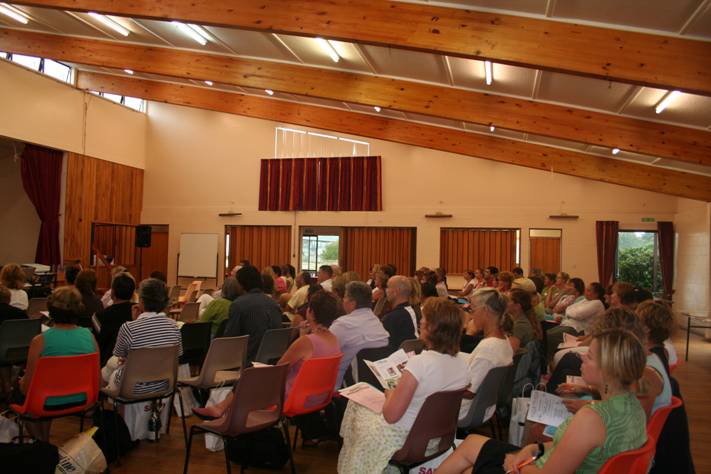
Three keynote speakers: Warren Patterson, Dr Gareth Schott and Russell Brebner along with 23 workshops offer diverse and exciting sessions to impact on our own teaching and learning practices.
"The more the merrier" You don't have to belong to our cluster to attend. If you are interested in joining us, contact me at LEWatchorn@wave.co.nz and I'll send out a registration form.
Thanks to Jill Hammonds for sharing these photos. You can check out Jill's blog at http://jillhammondsedblog.blog.co.nz/1499290/ to find out what she discovered on the day. Thank you for this feedback Jill.

Wednesday, October 25, 2006
MULTIMEDIA CHALLENGE
The 2006 WinTec Challenge is on again for students in Year 4,5 & 6
When - Tuesday 14th November, 10 am to 2.30pm
Where - Wintec, Hamilton
Using MS PowerPoint teams will be challenged to retell fairy tales. Each team can take a collection of photo images that they have prepared. These images must include at least 3 different endings to their story.
The expectation is that students will already know how to use PowerPoint, and in particular to:
The 2006 WinTec Challenge is on again for students in Year 4,5 & 6
When - Tuesday 14th November, 10 am to 2.30pm
Where - Wintec, Hamilton
Using MS PowerPoint teams will be challenged to retell fairy tales. Each team can take a collection of photo images that they have prepared. These images must include at least 3 different endings to their story.
The expectation is that students will already know how to use PowerPoint, and in particular to:
- Insert Images
- Insert sound files
- Record narrations
- Time presentations
- Complete custom animations
- Include appropriate slide transitions
- Insert and use action buttons
There will be prizes for the top efforts
To enter your school team, email whowes@xtra.co.nz before October 31st. There is a limit of 30 teams. If there are spaces available after Nov 4th, a second team will be allowed from schools. I wonder if we can ask to go on the waiting list for our 2nd teams. May pay to have one ready and waiting in the wings in case of sickness etc.
COLLABORATIVE PROJECTS FOR YOUR STUDENTS:
Here's an opportunity for students to take part in the development of animations using free software that you can download from the Internet.
Don't wait until you know how to use it - just give it to the kids, provide time for them to explore and then ask them to come up with a class challenge.
PIVOT STICK ANIMATOR can be downloaded free from
http://www.snapfiles.com/get/stickfigure.html
ALICE can be downloaded free from
http://www.alice.org/
PROJECT OPPORTUNITIES:
Paul Wilkinson from Te Papanui Cluster is running a section on Pivot Stick Animation for PC users, (see below for more details) and
Phillip Carroll, a 10 year old from Pine Hill School in Dunedin has prepared an animation project using Alice Software which is available to both Mac and PC users. (More details below too)
These are great opportunities for you to learn about animation alongside your students. The software is a free download.
Let your students explore the software, check out the tutorials and have them teach you how to do animation.
Anyone can! A teacher information section is also provided. If you have trouble logging on, use your Ulearn username and password. Let's know if you have difficulty.
Students love working with Pivot Stick Animation, it's great for designing PE activities, dance, drama and a huge variety of animation effects.
Students are finding innovative ways of incorporating it into learning programmes.
Paul Wilkinson from the Te Papanui cluster has created an animation project that helps you get started, and invites you (or, more specifically, your students) to take up the challenge of adding to the animation he's started - or contribute one of your own. You'll find everything you need. Please note that the project information is in the teacher section on the left, but student work samples should be uploaded to the student community area. (Sorry Mac users - only available for PCs at the moment)
* ALICE -
The good news is yet another cool free downloadable animation software available for both platforms and Phillip Carroll (a 10 year old from Pine Hill School in Dunedin) is currently working to set up a project using this "Alice" software for Term 4.
This software contains a step by step tutorial for those who need a lead in but most students will quickly by pass the tutorial and get straight to creating amazing animations.
These "teach yourself" programmes will be great for your students to explore while you are busy with small group teaching etc. Download now and let them at it.
Here's an opportunity for students to take part in the development of animations using free software that you can download from the Internet.
Don't wait until you know how to use it - just give it to the kids, provide time for them to explore and then ask them to come up with a class challenge.
PIVOT STICK ANIMATOR can be downloaded free from
http://www.snapfiles.com/get/stickfigure.html
ALICE can be downloaded free from
http://www.alice.org/
PROJECT OPPORTUNITIES:
Paul Wilkinson from Te Papanui Cluster is running a section on Pivot Stick Animation for PC users, (see below for more details) and
Phillip Carroll, a 10 year old from Pine Hill School in Dunedin has prepared an animation project using Alice Software which is available to both Mac and PC users. (More details below too)
These are great opportunities for you to learn about animation alongside your students. The software is a free download.
Let your students explore the software, check out the tutorials and have them teach you how to do animation.
Anyone can! A teacher information section is also provided. If you have trouble logging on, use your Ulearn username and password. Let's know if you have difficulty.
Click on this link to check out the animation project that helps you get started, and invites you (or, more specifically, your students) to take up the challenge
* PIVOT STICK ANIMATOR -Students love working with Pivot Stick Animation, it's great for designing PE activities, dance, drama and a huge variety of animation effects.
Students are finding innovative ways of incorporating it into learning programmes.
Paul Wilkinson from the Te Papanui cluster has created an animation project that helps you get started, and invites you (or, more specifically, your students) to take up the challenge of adding to the animation he's started - or contribute one of your own. You'll find everything you need. Please note that the project information is in the teacher section on the left, but student work samples should be uploaded to the student community area. (Sorry Mac users - only available for PCs at the moment)
* ALICE -
The good news is yet another cool free downloadable animation software available for both platforms and Phillip Carroll (a 10 year old from Pine Hill School in Dunedin) is currently working to set up a project using this "Alice" software for Term 4.
This software contains a step by step tutorial for those who need a lead in but most students will quickly by pass the tutorial and get straight to creating amazing animations.
These "teach yourself" programmes will be great for your students to explore while you are busy with small group teaching etc. Download now and let them at it.
Monday, October 23, 2006
TOWARDS THE FINISHING LINE -
- What will our teachers write as the eulogy to the Nga Tii Roa Contract once it has finished?
- Has it provided an immense challenge to thinking, pedagogy and community building skills?
- How have teachers been challenged to recognise the impact of ICTs into traditional teaching and learning models?
- Have schools been challenged to develop shared values and beliefs in each school?
Interesting questions as we move into our final year. If there are changes and they are to be sustained, the eulogy will hold consistent positive messages from those involved and these will be supported in teacher's present and future teaching and learning practices.
- What will our teachers write as the eulogy to the Nga Tii Roa Contract once it has finished?
- Has it provided an immense challenge to thinking, pedagogy and community building skills?
- How have teachers been challenged to recognise the impact of ICTs into traditional teaching and learning models?
- Have schools been challenged to develop shared values and beliefs in each school?
Interesting questions as we move into our final year. If there are changes and they are to be sustained, the eulogy will hold consistent positive messages from those involved and these will be supported in teacher's present and future teaching and learning practices.
TEACHER SURVEYS
An on-line survey for cluster teachers has been activated.
Pukehina Staff deserve a box of Jaffas for being the first to complete :-D
We were hoping to have these all completed by October 13th but have extended this until the end of the month.
Due in before October 31st, cluster staff can access the survey from the following link:
http://surveybuilder.edmin.com/surveyRegister.cfm?sc=2C5EE3E7-EED4-441C-924F0896CC337104
An on-line survey for cluster teachers has been activated.
Pukehina Staff deserve a box of Jaffas for being the first to complete :-D
We were hoping to have these all completed by October 13th but have extended this until the end of the month.
Due in before October 31st, cluster staff can access the survey from the following link:
http://surveybuilder.edmin.com/surveyRegister.cfm?sc=2C5EE3E7-EED4-441C-924F0896CC337104
Tuesday, September 19, 2006
UMAJIN -
Last Thursday I attended a session where Russell Brebner demonstrated the new updates to the Umajin software. If you haven't had a look at this NZ made application, you just wont know what you are missing. This creative publishing tool is so user friendly and loads of fun, ideal for primary aged children and a great introduction to such things as blue or green screening etc. It encourages exploration and creativity. For more details and to download a free 30 day trial click on: http://www.umajin.com/static/default.htm Good pricing makes this affordable and well suited to the school environment.
In our earlier discussions Gabi mentioned a concern regarding a compatibility problem with the video cards installed in the computers at Paengaroa. Thanks Gabi. This may not apply to your school computers and it would pay to check it out. There is a tool on the website which checks the compatibility of your computer with the software, during the 'trial' download.
I have invited Russell to join in this discussion so please add any questions you may have to this posting. That way we can all benefit from the dialogue.
It will also be worthwhile following it up if you are going to Ulearn. Umajin will be there. Have a play. It is great fun. So innovative!
Lorraine
Last Thursday I attended a session where Russell Brebner demonstrated the new updates to the Umajin software. If you haven't had a look at this NZ made application, you just wont know what you are missing. This creative publishing tool is so user friendly and loads of fun, ideal for primary aged children and a great introduction to such things as blue or green screening etc. It encourages exploration and creativity. For more details and to download a free 30 day trial click on: http://www.umajin.com/static/default.htm Good pricing makes this affordable and well suited to the school environment.
In our earlier discussions Gabi mentioned a concern regarding a compatibility problem with the video cards installed in the computers at Paengaroa. Thanks Gabi. This may not apply to your school computers and it would pay to check it out. There is a tool on the website which checks the compatibility of your computer with the software, during the 'trial' download.
I have invited Russell to join in this discussion so please add any questions you may have to this posting. That way we can all benefit from the dialogue.
It will also be worthwhile following it up if you are going to Ulearn. Umajin will be there. Have a play. It is great fun. So innovative!
Lorraine
Saturday, August 26, 2006
Our cluster hosted the Regional Dev Day yesterday. This is where the Facilitators and Directors of other ICT Contracts in the Central North Island area come together for a spot of PD themselves. Yesterday's focus was on "Sustainability". Paengaroa hosted the day brilliantly and I am grateful for all they did and the support received from Michele and Bruce, Mel and Vince, and everyone who attended.
If you attended the day and would like to comment and support further discussion, please click the comments link below this posting.
- You can log on as an anonymous poster if you don't want to go through the log on procedure, just adding your name to the bottom of the posting.
Yesterday, we all shared some of our Successful Strategies, and looked at
"What is a Learning Community"
"How do we develop it?"
"What are the barriers?" and
"What do we want to sustain?"
This culminated in the development of Action Plans - "Towards Sustainability"
My ponderings since have been on "Passionate Practitioners". This is something we all want to develop and want to continue beyond the contract. To do this we will need to analyse what it is that switches people on. Susan talked about 'initial reluctants' becoming desperate to learn as much as they can. What a wonderful thing to celebrate. We talked about how this occurred in one case. Wouldn't it be great if the formula could be bottled!
What ingredients make a person become a passionate practitioner through contract initiatives?
What makes a person turn from a reluctant or passive participant to a passionate seeker of understanding, developing their practice to impact on the learning needs of our digital generation?
What makes the paradigm shift from a supplier of information to a facilitator of student inquiry and understanding?
If you attended the day and would like to comment and support further discussion, please click the comments link below this posting.
- You can log on as an anonymous poster if you don't want to go through the log on procedure, just adding your name to the bottom of the posting.
Yesterday, we all shared some of our Successful Strategies, and looked at
"What is a Learning Community"
"How do we develop it?"
"What are the barriers?" and
"What do we want to sustain?"
This culminated in the development of Action Plans - "Towards Sustainability"
My ponderings since have been on "Passionate Practitioners". This is something we all want to develop and want to continue beyond the contract. To do this we will need to analyse what it is that switches people on. Susan talked about 'initial reluctants' becoming desperate to learn as much as they can. What a wonderful thing to celebrate. We talked about how this occurred in one case. Wouldn't it be great if the formula could be bottled!
What ingredients make a person become a passionate practitioner through contract initiatives?
What makes a person turn from a reluctant or passive participant to a passionate seeker of understanding, developing their practice to impact on the learning needs of our digital generation?
What makes the paradigm shift from a supplier of information to a facilitator of student inquiry and understanding?
Monday, August 21, 2006
The Draft Curriculum was discussed this morning at our cluster meeting with Beth Dungey. Just sad that some were not able to attend as they really missed out. I found it a very interesting session. Beth walked the talk, listened and discussed the document, sharing her insights having been involved in the trial project with a Putaruru cluster.
This session was very timely as our next milestone requires each of our cluster schools to have had in depth discussions on identifying Powerful Learning and the needs of the 21st century learner. This morning's discussions tie in beautifully as we look at effective pedagogy.
Beth also shared some of the work by Jay McTighe in "Understanding By Design". (He is coming to NZ next year). His work has strong links to planning for Inquiry, where we usually start with the end on mind, working backward as we plan. "What is the key understanding that we want children to gain? How will we know that they have succeeded in this understanding?" You might like to take a look at his work on the net. Looked up the site www.sdttl.com/2002/ubd.htm which provides indicators of Teaching for Understanding and the various roles. See also the rubric on the 6 facets of understanding http://faculty.fullerton.edu/npelaez/BIOL102/UBDrubric.htm
At this stage I feel really excited by the new draft and can see how the three booklets: the Draft curriculum, The E-Learning Action Plan and the Schooling Strategy all seem to come together well.
Each school's vision for learning will play a major part and will come alive, as will the partnerships in learning and the development of each school community's individually owned School Curriculum.
Questions were raised re social engineering, the impact on the Negs & Nags, the place of the Treaty etc. We talked about the Yr 7 & 8 teaching of a second language. All led to very interesting discussions.
Hmm, I am still a little unclear re the difference between Values and Principles. Are Principles the outward attitudes while the values are the inwardly held beliefs that promulgate these principles???
Thanks Bruce, Craig and Michele for attending and to Beth for a stimulating morning's work. :-) It was a buzz!
PS - Do our cluster schools know that they can get a free audioconferencing code from the MoE's ICT Help Desk? They can then conference with no cost. Great eh!
- Cheers, Lorraine
This session was very timely as our next milestone requires each of our cluster schools to have had in depth discussions on identifying Powerful Learning and the needs of the 21st century learner. This morning's discussions tie in beautifully as we look at effective pedagogy.
Beth also shared some of the work by Jay McTighe in "Understanding By Design". (He is coming to NZ next year). His work has strong links to planning for Inquiry, where we usually start with the end on mind, working backward as we plan. "What is the key understanding that we want children to gain? How will we know that they have succeeded in this understanding?" You might like to take a look at his work on the net. Looked up the site www.sdttl.com/2002/ubd.htm which provides indicators of Teaching for Understanding and the various roles. See also the rubric on the 6 facets of understanding http://faculty.fullerton.edu/npelaez/BIOL102/UBDrubric.htm
At this stage I feel really excited by the new draft and can see how the three booklets: the Draft curriculum, The E-Learning Action Plan and the Schooling Strategy all seem to come together well.
Each school's vision for learning will play a major part and will come alive, as will the partnerships in learning and the development of each school community's individually owned School Curriculum.
Questions were raised re social engineering, the impact on the Negs & Nags, the place of the Treaty etc. We talked about the Yr 7 & 8 teaching of a second language. All led to very interesting discussions.
Hmm, I am still a little unclear re the difference between Values and Principles. Are Principles the outward attitudes while the values are the inwardly held beliefs that promulgate these principles???
Thanks Bruce, Craig and Michele for attending and to Beth for a stimulating morning's work. :-) It was a buzz!
PS - Do our cluster schools know that they can get a free audioconferencing code from the MoE's ICT Help Desk? They can then conference with no cost. Great eh!
- Cheers, Lorraine
Sunday, August 20, 2006
GATE, Inquiry, New Opportunities:
Last Thursday a group traveled to Hamilton visiting Aberdeen School in the morning and Goodwood School in Fencourt in the afternoon. Off then to Wanganui visiting Kaitoke School on Friday morning and Rutherford Intermediate in the afternoon, returning to the Bay late Friday evening.
Aberdeen School had been in an ICT contract during 2002 - 2005 and it was interesting to see the impact that this has had and what has been built upon since. We appreciated the generosity of Murray and his team as they candidly shared their journey. The school has been on a journey into Inquiry Learning, firstly adopting a model, then adapting it as understandings developed and then creating their own school-wide Inquiry Process model. Skills are being taught across the school and a deepening understanding of the various stages is being developed. Our visit was enriched by having the students share with us their own personal understanding of Questioning levels. The school wide model has been developed further allowing its own unique flavour within each classroom. The visuals in each classroom reflect the teacher's own interests. e.g. one class illustrated the process as a soccer field, placing students along the continuum as they all headed for the goal. Another illustrated this with a journey through the Forest of Learning. We visited the school's digital classrooms which led to some interesting discussion as we tried to define the term "digital classroom".
Goodwood School in Fencourt had also been involved in an ICT Contract - some years ago during the first round. Goodwood has recently won an EHSA contract, forming a cluster of 10 local schools, nominating a shared focus. It was their journey in this regard which was of particular interest and we were privileged to glean insights into the cluster vision and direction.
Striking the mid island mountains and their captivating views in the evening sunlight was a magical addition to our trip and after much professional dialogue and reflection on the way down, we discovered Wanganui at around 8 that night.
Thursday morning found us receiving a warm welcome from Chris Gullery, Principal of Kaitoke School, a small rural school on the outskirts of Wanganui. This visit was prompted by a report on the 'net of Chris's investigation to "identify the most effective teaching practices and organisational strategies used to accelerate learning outcomes for gifted and talented students in Wanganui District Schools". See http://www.leadspace.govt.nz/leadership/pdf/gullery-sabbatical-05.pdf What a highlight this visit was, to hear from both Chris on the facilitation of learning for GATE students and from Megan, the facilitator of the e-learning project trialled in partnership with Massey University. The digital natives involved in the project still hankered for the face to face aspects of learning together. The passion of both Chris and Megan was contagious and again we were privileged to experience the candour and openness offered from their reflection and experience in this journey.
It was at Kaitoke that we dabbled with Umajin. Yep, I had had a play with this software at L @ S in Rotorua in February and was impressed as much with the perceptiveness of its developers as with the trial version of the then unfinished publishing programme. This creative publishing tool is so user friendly and loads of fun. It encourages exploration and creativity. For more details and to download a free 30 day trial click on: http://www.umajin.com/static/default.htm Good pricing makes this affordable and well suited to the school environment.
Rutherford Intermediate in Wanganui was our last port of call and we were fortunate to hear and discuss the YAP programme run here. Simon and others shared the work the school is doing in their Young Achievers Programme, enhancing and refining the skills of those students to set them up for success in their chosen field. We are indeed fortunate to have meet with so many passionate practitioners over the past two days.
Our sincere thanks to the Principals and staff of Aberdeen School, Goodwood School, Kaitoke School and Rutherford Intermediate.
Last Thursday a group traveled to Hamilton visiting Aberdeen School in the morning and Goodwood School in Fencourt in the afternoon. Off then to Wanganui visiting Kaitoke School on Friday morning and Rutherford Intermediate in the afternoon, returning to the Bay late Friday evening.
Aberdeen School had been in an ICT contract during 2002 - 2005 and it was interesting to see the impact that this has had and what has been built upon since. We appreciated the generosity of Murray and his team as they candidly shared their journey. The school has been on a journey into Inquiry Learning, firstly adopting a model, then adapting it as understandings developed and then creating their own school-wide Inquiry Process model. Skills are being taught across the school and a deepening understanding of the various stages is being developed. Our visit was enriched by having the students share with us their own personal understanding of Questioning levels. The school wide model has been developed further allowing its own unique flavour within each classroom. The visuals in each classroom reflect the teacher's own interests. e.g. one class illustrated the process as a soccer field, placing students along the continuum as they all headed for the goal. Another illustrated this with a journey through the Forest of Learning. We visited the school's digital classrooms which led to some interesting discussion as we tried to define the term "digital classroom".
Goodwood School in Fencourt had also been involved in an ICT Contract - some years ago during the first round. Goodwood has recently won an EHSA contract, forming a cluster of 10 local schools, nominating a shared focus. It was their journey in this regard which was of particular interest and we were privileged to glean insights into the cluster vision and direction.
Striking the mid island mountains and their captivating views in the evening sunlight was a magical addition to our trip and after much professional dialogue and reflection on the way down, we discovered Wanganui at around 8 that night.
Thursday morning found us receiving a warm welcome from Chris Gullery, Principal of Kaitoke School, a small rural school on the outskirts of Wanganui. This visit was prompted by a report on the 'net of Chris's investigation to "identify the most effective teaching practices and organisational strategies used to accelerate learning outcomes for gifted and talented students in Wanganui District Schools". See http://www.leadspace.govt.nz/leadership/pdf/gullery-sabbatical-05.pdf What a highlight this visit was, to hear from both Chris on the facilitation of learning for GATE students and from Megan, the facilitator of the e-learning project trialled in partnership with Massey University. The digital natives involved in the project still hankered for the face to face aspects of learning together. The passion of both Chris and Megan was contagious and again we were privileged to experience the candour and openness offered from their reflection and experience in this journey.
It was at Kaitoke that we dabbled with Umajin. Yep, I had had a play with this software at L @ S in Rotorua in February and was impressed as much with the perceptiveness of its developers as with the trial version of the then unfinished publishing programme. This creative publishing tool is so user friendly and loads of fun. It encourages exploration and creativity. For more details and to download a free 30 day trial click on: http://www.umajin.com/static/default.htm Good pricing makes this affordable and well suited to the school environment.
Rutherford Intermediate in Wanganui was our last port of call and we were fortunate to hear and discuss the YAP programme run here. Simon and others shared the work the school is doing in their Young Achievers Programme, enhancing and refining the skills of those students to set them up for success in their chosen field. We are indeed fortunate to have meet with so many passionate practitioners over the past two days.
Our sincere thanks to the Principals and staff of Aberdeen School, Goodwood School, Kaitoke School and Rutherford Intermediate.
Sunday, August 13, 2006
Pam raised the issue of Staff Changes and how they affect a Cluster's direction within a school....
How good it is that you are there helping push the barrow at Maketu, Pam. High staff turn over is certainly a stumbling block for ongoing development and innovation. Changes in Principals during a contract like ours can also have a backward step although this hasn't been the case at all in our cluster fortunately.
For the new members, it takes time to settle in, read the situation and link into an existing vision. That's why our cluster and a school's vision for learning is so important. When the vision is an active work in progress, understood and owned by all, it is easy to merge the new in "like a zip".
The vision is the greater entity, needs to be flagged at the interview stage and again during the process. If you have seen the school's ICT Plan, this is clearly flagged under Staff Capability. Incoming staff can be asked to contribute into the journey to assist the vision being realised.
Would love to hear from people on the following:
- How active is your school’s vision?
- What is it and how was it formed?
- How do you as a learning community discuss it?
- When is it reviewed?
Lorraine
How good it is that you are there helping push the barrow at Maketu, Pam. High staff turn over is certainly a stumbling block for ongoing development and innovation. Changes in Principals during a contract like ours can also have a backward step although this hasn't been the case at all in our cluster fortunately.
For the new members, it takes time to settle in, read the situation and link into an existing vision. That's why our cluster and a school's vision for learning is so important. When the vision is an active work in progress, understood and owned by all, it is easy to merge the new in "like a zip".
The vision is the greater entity, needs to be flagged at the interview stage and again during the process. If you have seen the school's ICT Plan, this is clearly flagged under Staff Capability. Incoming staff can be asked to contribute into the journey to assist the vision being realised.
Would love to hear from people on the following:
- How active is your school’s vision?
- What is it and how was it formed?
- How do you as a learning community discuss it?
- When is it reviewed?
Lorraine
Thursday, August 10, 2006
If we go back to the outset of the cluster, infrastructure was a key issue to the development of the cluster vision.
Great to see your school benefiting from the MoE's infrastructure upgrade, Pam. The foundations are being laid although I guess it never can happen fast enough.
At one time second hand equipment was OK in schools. It depended on the way computers were being used. Some schools bought high end machines and only used the surface features of them. By the time the school moved into the multimedia applications the existing equipment was often outdated. Other schools bought according to use and decided to allow staff professional development to form the basis of future purchases. When the equipment was going to be fully accessed, the need to purchase appeared right. Interesting to note that the most sophisticated computer was put into the secretaries office when their use was often limited to email, and word processing. The power of multimedia in learning pushes the boundaries more and more and those users need the equipment required to support this dimension.
Faulty equipment needs to be weeded from schools. Just like a library full of dull and boring books, holding on to these dinosaurs can become a huge turn off and build a barrier to progress. Teachers understandably get frustrated, become reluctant to use the equipment, and simply switch off! This equipment then becomes a huge hurdle to teacher development and student learning.
Another issue, that of sustainability raises its head. As more interactive whiteboards, laptops and hardware are bought or leased, the question of "how will schools sustain the flow that has begun?" raises its head. Leasing seems the more practical option than purchase and is definitely one I would recommend. Most leases run for three years. Perhaps a two year lease is to be considered as the rate of technological change increases. Who wants a machine that is older than 3 years? Who wants to spend money on repairs and upgrades on machines that have been purchased outright?
Great to see your school benefiting from the MoE's infrastructure upgrade, Pam. The foundations are being laid although I guess it never can happen fast enough.
At one time second hand equipment was OK in schools. It depended on the way computers were being used. Some schools bought high end machines and only used the surface features of them. By the time the school moved into the multimedia applications the existing equipment was often outdated. Other schools bought according to use and decided to allow staff professional development to form the basis of future purchases. When the equipment was going to be fully accessed, the need to purchase appeared right. Interesting to note that the most sophisticated computer was put into the secretaries office when their use was often limited to email, and word processing. The power of multimedia in learning pushes the boundaries more and more and those users need the equipment required to support this dimension.
Faulty equipment needs to be weeded from schools. Just like a library full of dull and boring books, holding on to these dinosaurs can become a huge turn off and build a barrier to progress. Teachers understandably get frustrated, become reluctant to use the equipment, and simply switch off! This equipment then becomes a huge hurdle to teacher development and student learning.
Another issue, that of sustainability raises its head. As more interactive whiteboards, laptops and hardware are bought or leased, the question of "how will schools sustain the flow that has begun?" raises its head. Leasing seems the more practical option than purchase and is definitely one I would recommend. Most leases run for three years. Perhaps a two year lease is to be considered as the rate of technological change increases. Who wants a machine that is older than 3 years? Who wants to spend money on repairs and upgrades on machines that have been purchased outright?
Tuesday, July 04, 2006
Our cluster is half way through its contract. As a cluster facilitator I am always looking at how we can improve and sustain the learning community that has developed. To do this I think it is worthwhile to consider two major questions:
- What do you think makes a good learning community?
- What are the strengths that we want to see continue?
Would value your thoughts
- What do you think makes a good learning community?
- What are the strengths that we want to see continue?
Would value your thoughts
Welcome to Lorraine's blog. Here I would like to discuss, reflect and share items of an ict nature as they apply to education. I am an ICTPD facilitator, have been for 4 1/2 years. It is an exciting world where a love of thinking, problem-solving and learning thrive. Pondering about the future and reflecting on the past enriches this process. Doing this on my own is not nearly as stimulating as doing it with others. Come on in, draw up a keyboard, and join in the chat...
Subscribe to:
Posts (Atom)
RELLCO

Our Cluster Journey Together Into New Horizons.